Eleven primary sources, in the order the war actually happened — from the argument that split the nation nine years before Fort Sumter to the surrender that ended it. Speeches, proclamations, and first-person battlefield accounts sit side by side exactly where they fall in the timeline. The shorter speeches (the Gettysburg Address, Lee's farewell order) and the Emancipation Proclamation and Second Inaugural Address appear as complete, unabridged texts, split into a short sequence of waypoints for documents long enough to need one; the Cornerstone Speech and the Douglass oration appear as the complete bounded argument sections their famous lines are drawn from (full completion wasn't responsible at their length — see each story's source note); the five soldier and nurse accounts appear as the complete scene each excerpt was drawn from, not the whole book or letter. Read in order to follow the whole arc, or jump to any one story — each stands on its own, and each says exactly what portion of its source it covers.
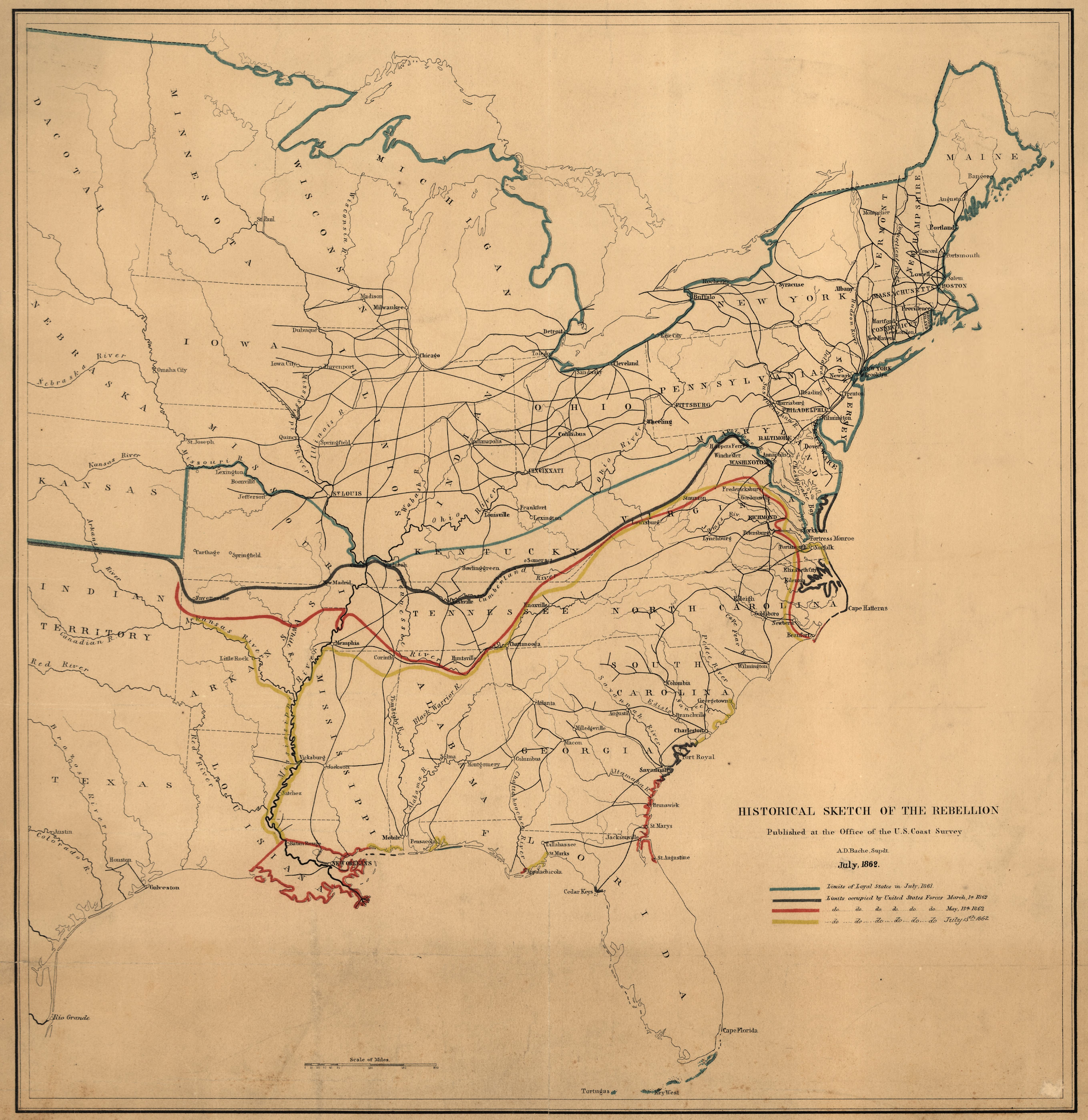
Tap a marker to open its stories. Positions are approximate on this historical map.
View the full map and source- Corinthian Hall · 1852
- The Athenaeum (Savannah Theatre) · 1861
- Shiloh battlefield · 1862
- Burnside's Bridge, Antietam Creek · 1862
- Sunken Road, Marye's Heights · 1862
- The Executive Mansion · 1863
- The Angle, Cemetery Ridge · 1863
- Soldiers' National Cemetery · 1863
- Fort Wagner site, Morris Island · 1864
- United States Capitol, east front · 1865
- Appomattox Court House · 1865
Choose a story
Eleven primary sources from the war that redefined the republic, in their own words — six read in complete or near-complete full text, five as the complete scene each excerpt was drawn from. Pick one, read it, and talk about what it means — the choice, the virtue, your own life — with your History Coach, who asks instead of tells.
Loading the interactive story shelf…
- Distance — This Fourth of July Is Yours, Not Mine Distance
- Witness — The Mournful Wail of Millions Witness
- Manhood — What Point Remains to Be Argued? Manhood
- Reckoning — What to the Slave Is the Fourth of July Reckoning
- Order — The Cornerstone Order
- Transformation — It Was Fun Then Transformation
- Instinct — The Consuming Passion to Get Out of the Way Instinct
- Resolve — Two Kinds of Fear Resolve
- Warning — The Preliminary Proclamation, Recited Warning
- Boundary — Freedom Declared, State by State Boundary
- Necessity — An Act of Justice, Warranted by Military Necessity Necessity
- Crest — The Last and Bloodiest Fight Crest
- Trial — The Proposition Put to the Test Trial
- Endurance — An Aversion Overcome Endurance
- Restraint — Little That Is New Restraint
- Reluctance — And the War Came Reluctance
- Cause — A Peculiar and Powerful Interest Cause
- Judgment — Let Us Judge Not Judgment
- Charity — With Malice Toward None Charity
- Duty — An Affectionate Farewell Duty
Read the story above, then talk it over with your History Coach — this is about what the story means and what you would do, not a quiz on what happened. Type, or tap the mic to speak. Story listening uses the original telling. Select the original text to hear an individual sentence.
Off by default — the student chooses their own lens under "Think deeper". Pick one here and the lesson opens already pointed through that tradition, so a class can argue the same story from the same angle.
Off by default. A teacher turns this on when they want a visible session timer and a timestamped record of how long the work took.
Assign these questions
A teacher or a parent picks the story and assigns its questions — one chapter at a time, not a whole book.
What was saved
This is the real conversation from this device — a teacher would read it, and hear it read back.